The Introduction of MEES into Social Housing

In 2025, the government ran a consultation on the introduction of MEES into the social rented sector. It was proposed that this would be based on new metrics being put forward under EPC reforms. 

The outcome of that consultation was published at the beginning of 2026, and confirmed that by 1st of April 2030, all socially rented properties will need to reach EPC C or equivalent.  

This is a significant step for the sector and gives social housing providers a clear, non negotiable goal. The question for social housing providers will now be, how do they reach EPC C by 2030 in the most cost-effective way?

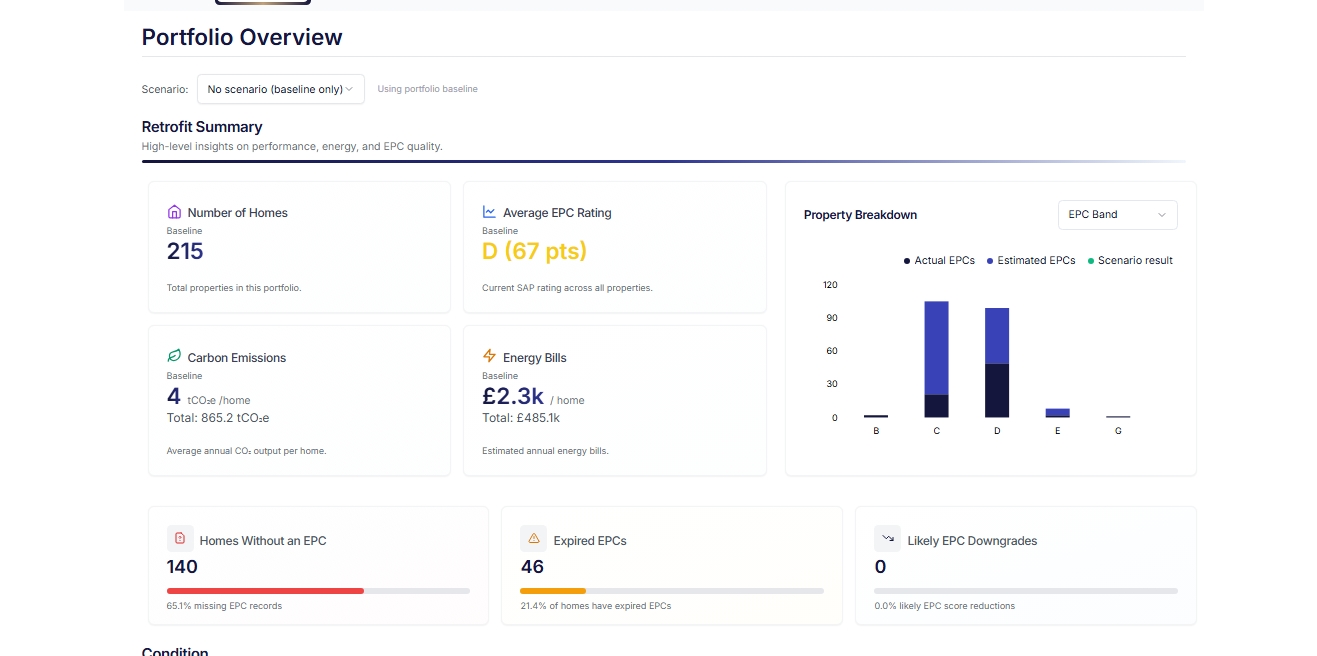
Meeting MEES is not just about individual homes. It requires visibility across whole portfolios, so providers can prioritise the right properties, choose the right measures and plan delivery at pace.  

That means modelling cost, sequencing interventions and understanding the trade-offs between compliance, funding and long-term asset performance. Tools like Ara are designed to support that level of strategic decision-making.

Key Requirements: What You Need to Know

What are the Minimum Energy Efficiency Standards (MEES)?

Minimum Energy Efficiency Standards, or MEES, set a minimum energy performance standard for rented homes.  The minimum EPC rating is designed to reduce fuel poverty, lower bills, and improve conditions for tenants. 

This is the first time that socially rented homes must meet MEES. This marks a shift from voluntary energy performance improvement works to clear legislated targets. 

What are the new Minimum Energy Efficiency standards for social housing?

So, what do you actually have to reach?  By the 1st of April 2030, all new and existing social housing will need to have one of the following:  

  • A valid EPC certificate with either an A, B or C rating under the current/old format 
  • A valid EPC under the new Home Energy Model (coming at the end of 2026) with an A, B or C rating against one of the following metrics:
Fabric Performance 
Heating System  
Smart readiness   
What are the new Minimum Energy Efficiency standards for social housing?
How do you reach EPC C compliance? There are a few different routes. 

Properties that are already EPC C under the current rules


If your properties are already at EPC C, you can lock this in under the current EPC rules and still be considered compliant with MEES. The same applies for any EPC C certificates renewed before 2030 which will be valid for 10 years or the duration of the validity period.  

Properties that can easily get to EPC C under the current guidelines before 2030

Similar to the previous, if you can do minor works to your properties and get them to an EPC C prior to the new EPC Energy Efficiency Ratings being brought in, you too can lock your properties in at an EPC C under the current MEES standard for up to 10 years or the validity period of your certificate.  

Upgrade properties to meet the new EPC requirements


Under the new guidance, you will have to meet the new reformed EPC C guidance against any one metric of your choice by April 2030You can choose to meet: Fabric performance, Smart readiness or heating system depending on what most benefits your stock and tenants.  

EPC C by 2030 timeline social housing

What you must do and when

Deadlines are clear. The harder question is how to build a deliverable plan across your whole stock. 

1

What must happen now

Prepare your retrofit strategy, assess your data, and make a plan to achieve EPC C by 2030.
2

What must happen in 2030

By the 1st of April, all homes must either achieve EPC C under the current guidelines, meet EPC C on one of the new reformed criteria (more below), or have a valid exemption.
3

What happens in 2039

By the 1st of April 2039, homes must meet EPC C against a second criterion.

Who do the new MEES EPC C rules apply to in social housing?

The new Minimum Energy Efficiency Standards will apply to all registered providers of social housing in England, including private registered providers and local authority registered providers.  

It doesn’t include properties that are under Low-Cost Home Ownership Schemes (LCHO) – things like shared ownership properties.  

There’s an exception for properties where reaching MEES would cost more than £10,000, between now and the 1st of April 2030. If, after spending the £10,000, the property still doesn’t reach EPC C, social housing providers may be eligible for a delay on meeting the standard for a further 10 years from 2030; however, if housing providers want to invest more to reach compliance sooner, they can. 

Strategic Planning for Compliance and Decarbonisation

Most housing providers manage a mix of property types, ages and construction methods. Performance varies widely across a portfolio. 

Meeting MEES therefore requires more than upgrading individual homes. It requires a clear, coordinated retrofit strategy that aligns with wider obligations such as the Decent Homes Standard and Awaab’s Law. 

Without a structured plan, providers risk overspecifying works, duplicating interventions and increasing disruption for residents. 

A data-led approach allows you to prioritise the right homes, sequence works effectively and control costs. That is where Domna supports social housing providers, helping you plan MEES compliance across your whole stock with robust data and cost modelling. 

Strategic Planning for Compliance and Decarbonisation

Assessing Your Portfolio: Knowing Where You Stand

Start with data. Up-to-date EPCs tell you which homes are already compliant, which need minor works, and which need serious intervention. Without that picture, you’re guessing.  

Ara can tell you where there are gaps in your data as well as provide insights that support prioritisation of EPC programmes. 

Getting EPCs for properties with an estimated C or near-C rating reduces resource drain on unnecessary retrofit assessments for homes that would not be eligible for grants. 

Assessing Your Portfolio: Knowing Where You Stand

Developing a Robust Social Housing Retrofit Strategy

To meet MEES across your entire stock, you need an integrated, prioritised strategy.   You need to look at your portfolio as a whole to decide the best way to do this.   We typically see that social housing stock falls into three broad categories when targeting EPC C compliance, each requiring a different delivery and investment approach. It’s important that homes are identifiable by category to control cost, funding bids, and to minimise disruption.  

Category 1 – Minor Works

Quick wins. Low cost. Minimal disruption.

These are homes that only need small upgrades to meet current EPC requirements. These are generally pretty low cost and are best off being self-funded and done outside of PAS 2035. It is a fast, low disruption way to meet MEES and can often upgrade large chunks of portfolios with minimal effort and cost.  

Category 2 – Coordinated Retrofit

Planned intervention. Funding aligned. PAS-led delivery.

These are homes that need more targeted intervention and may benefit from funding through schemes like the Warm Homes Social Housing fund, WH:SHF. These should be planned and coordinated to ensure that works are done once and done right. PAS 2035 is required for most grant funded work like WH:SHF. 

Category 3 – Strategic Investment

High capital decisions. Asset-level judgement required.

These are homes that will come with a higher cost to reach compliance and require a strategic level decision on the amount of investment to put into them. These will be things like expensive upgrades that are needed, they are hard to treat or those that need block-level intervention. 

Practical Steps: Decisions to Make Now

So, what do you do now? We know that social housing EPC requirements are changing, and all social housing providers, including local authorities and housing associations, will need to comply with the changes.  

  1. Get support – choose a data partner who can help you navigate the regulations, prioritise your stock, and create a retrofit strategy that can be rolled out. 
  2. Get your data in order – ensure you have a list of up-to-date EPCs on all your properties that you can use to analyse and make decisions.  
  3. Align internal teams – make sure all teams are aware of these changes coming in and the impact that this may have on current strategies. 

This is where having the right data and insight partner can make the difference between reacting to deadlines and planning with confidence. 

Practical Steps: Decisions to Make Now

How Domna can help you reach MEES compliance

Domna helps you identify the most cost-effective way to meet EPC C by using our planning and decision platform, Ara. Ara turns your ambitions into costed delivery choices by telling you: 

  • How much upgrades will cost  
  • Which homes matter most  
  • Realistic delivery timelines  

It models real homes with real measures and costs so you can set credible budgets, define achievable targets, and understand the trade-offs between depth, volume, and funding.  

We work independently at a portfolio scale to provide you with the insights that you need to make confident decisions across your stock.  


Talk to us about your retrofit strategy

If you are unsure how your stock performs under current or reformed EPC rules, we can model it for you.

FAQs

Does MEES apply to all social housing in England?
What is the EPC C by 2030 target for social housing?
Where can social housing providers find funding for energy efficiency improvements?
How does PAS 2035 relate to MEES and EPC C targets?